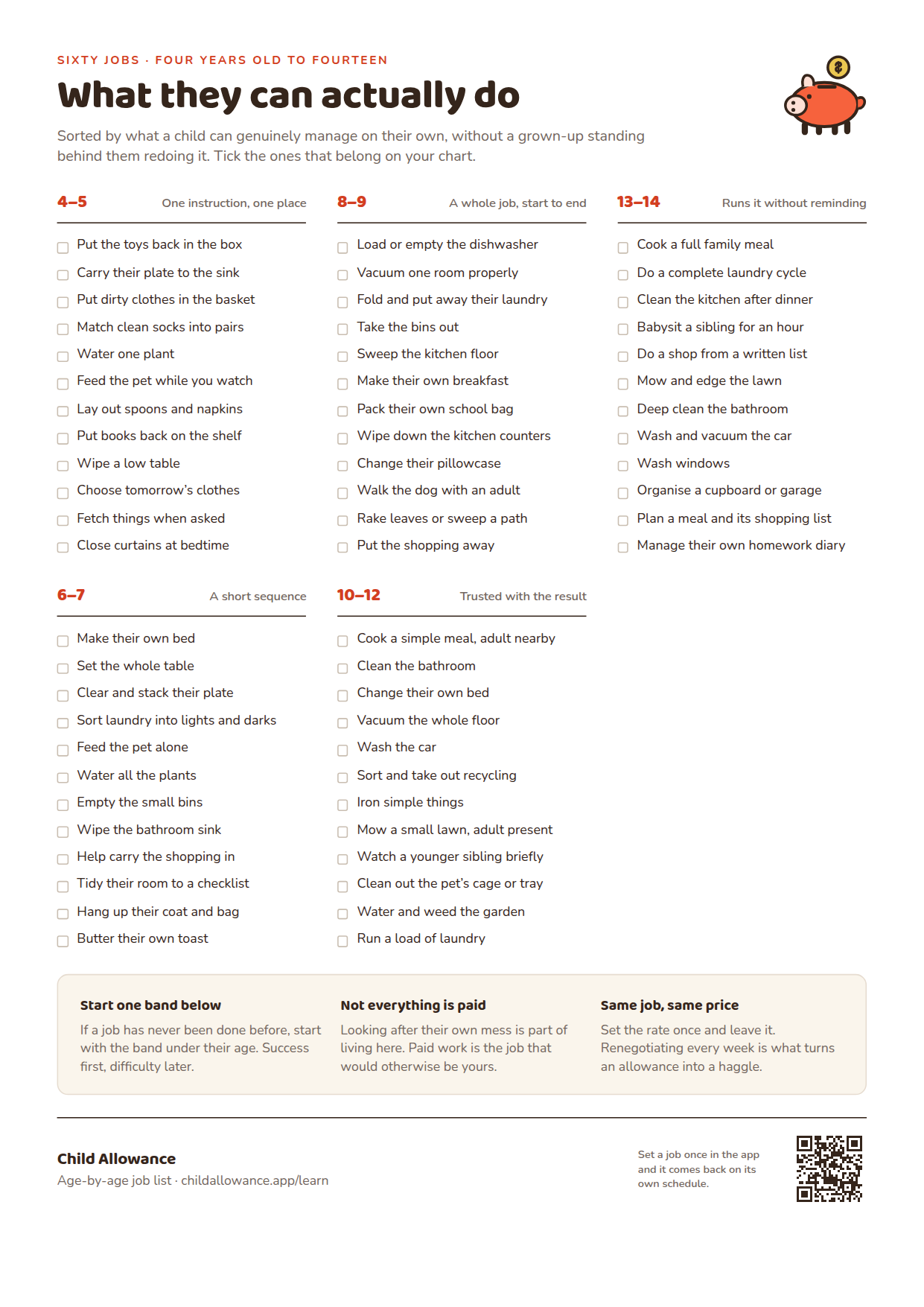
Sixty jobs with a tickbox each, in four bands: four to six, seven to nine, ten to twelve, and thirteen plus. The bands are about what a child can finish alone — not what they can attempt with you in the room, which is a much longer list and a much less useful one.
Going through it
Do it together, out loud, with the child it’s about. Ten minutes at a kitchen table. Read each job and ask whether they could do it tomorrow without being talked through it, and tick the ones where you both say yes.
Start in the band below their age and work up. Nearly everyone finds two or three jobs a child could plainly manage that an adult is still doing out of pure habit — those are the ones worth handing over first, because the child is already capable and the handover is immediate.
Read the band above too. Don’t tick it; just read it. It tells you what the next year looks like, and children are usually far keener on a job listed as being for older children than on the same job presented as a chore.
Turning ticks into a routine
Stop at five. The list is sixty jobs long so it covers a decade and any household, not because anyone should be doing sixty of them. Five ticked jobs that actually happen beat fifteen that produce a weekly argument and a sense of failure on both sides.
Of the five, decide which are simply expected and which are paid — that split matters more than the jobs themselves, and the guide below goes through where the line falls. Then copy the paid ones onto a chart or a set of cards. This sheet is for deciding; something else runs the week.
Printing it
Both paper sizes are on this page, each set for its own dimensions. Print at 100% so the tickboxes stay big enough for a child to tick, and mono is fine — the bands are separated by rules and headings rather than by colour.
Keep the sheet after you’ve used it, with the date at the top. Its real value is on the second pass: six months later the same page shows you exactly what has moved, and what you are still doing for a child who has outgrown needing you to.
A note on the bands
They are a guide to sequence, not a schedule. Children vary enormously, and a nine-year-old who has never been asked to do anything is not behind — they just start where they start. Use the order rather than the ages: the bands are built so each one rests on the skills of the one before it.