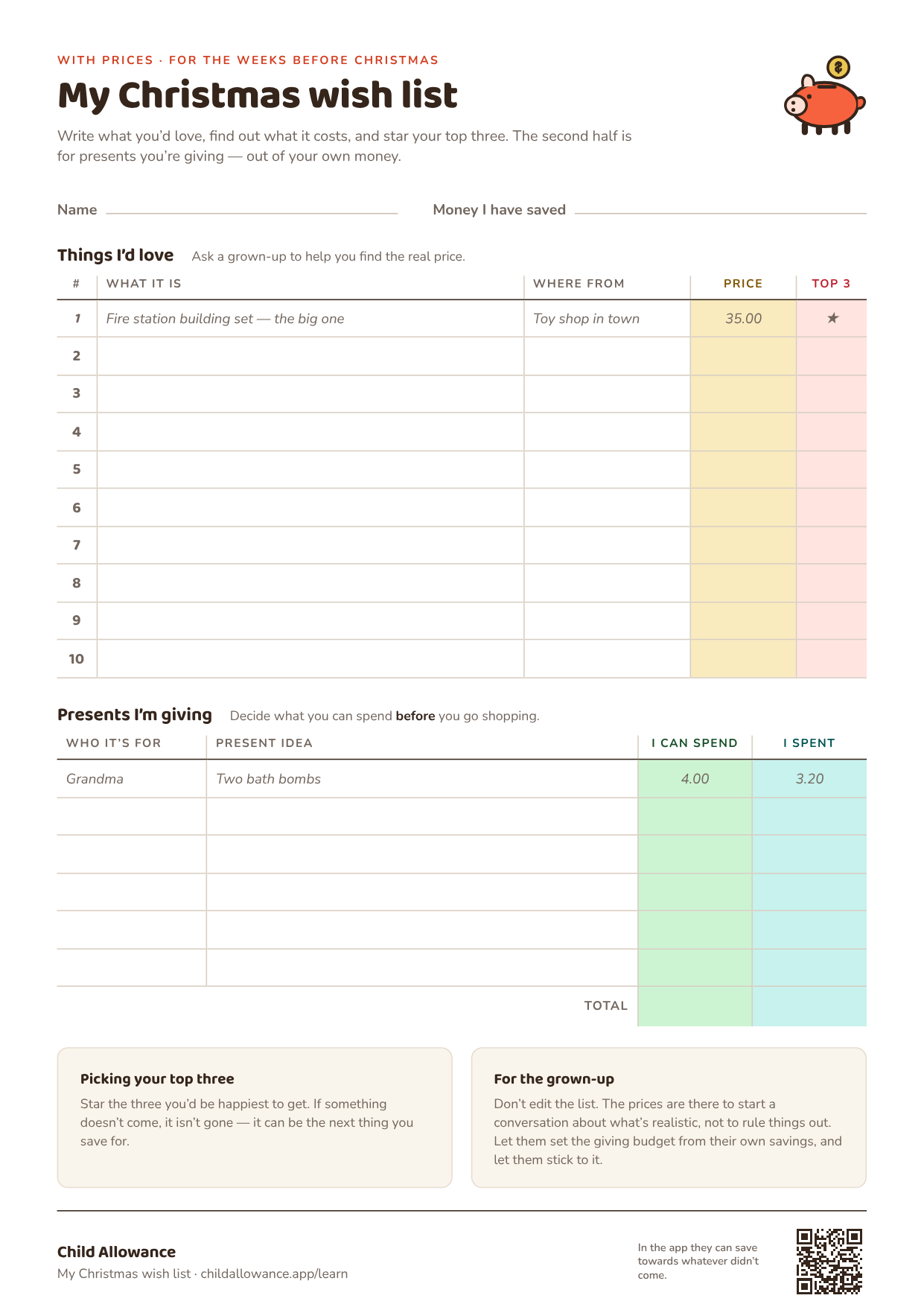
Two halves on one page. The top is Things I’d love: ten numbered lines with columns for what it is, where it comes from, the price, and a Top 3 star. The bottom is Presents I’m giving: six lines for who it’s for, the idea, what they can spend and what they spent, with a total at the foot. A name line and a “money I have saved” line run across the top.
The price column is what makes it different from a letter to Father Christmas. A list with prices on it is something a child can hold up against the money they actually have.
Filling in the wish half
Let them write it, spelling and all. Find the prices together — online, in a catalogue, or on a trip into town — and let them write each number in themselves. Expect surprises in both directions: some things are cheaper than they assumed, and one is always far dearer.
Then the stars. Three, no more. Choosing three out of ten is a ranking most children have never been asked to do with things they want, and it tells you more about what matters to them than the list itself does.
Running the giving half
This half is paid from their own money — the give jar if you use one, savings if not. Before any shopping, they fill in I can spend for each person and check the total against the “money I have saved” line at the top. If the total is bigger, something changes now, at the table, rather than at the till.
After shopping, they fill in I spent. Coming in under on one present and over on another is fine; the total is the line that has to hold. For a primary-school child giving to family, £2 to £5 a person is plenty, and homemade counts.
After Christmas
Keep the sheet. Anything starred that didn’t arrive is a savings goal with the price already attached — copy it into the goal box of a pocket money book and it becomes January’s target. Christmas money tends to arrive in a lump, and a goal already waiting is what stops the lump disappearing in a week.
Printing it
Both paper sizes are on this page. Print at 100% so the rows keep their full height. Colour helps the price and budget columns stand out, but mono works. Print one per child: siblings comparing lists is half the fun, sharing one is not.