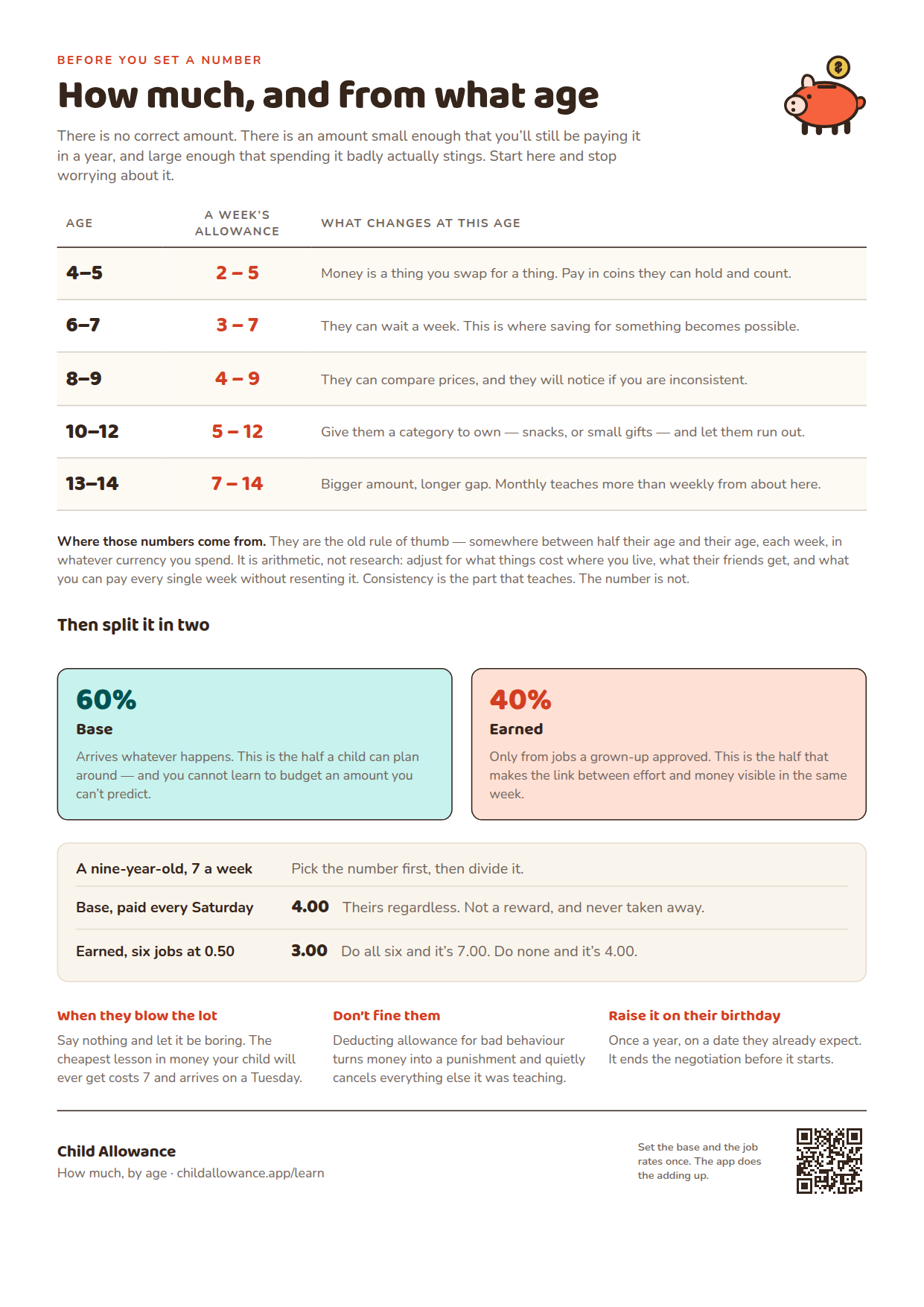
A row for each age from four to fourteen, each with a typical weekly range and a line for what you actually decide. At the foot, a small panel with three blank boxes — a base, an earned amount, and the weekly total they add up to — plus a dated line for when the number gets looked at again.
Using the ranges
They are a sanity check, not a rate card. Their job is to tell you whether the number you had in mind is roughly what other households land on, and they move a great deal with country and city — the ranges printed here follow the convention of the currency you see them in rather than being converted between them.
Pick a number inside your child’s band, write it on the line, and stop optimising it. A smaller amount that arrives on the same day every week teaches more than a larger one that arrives when someone remembers, and the gap between those two isn’t close.
Filling in the split
The panel at the bottom is the part most worth completing. Write the base — the amount that arrives whatever happened that week — then the earned part that only comes from approved jobs. Around two-thirds base is a sensible place to start, shifting toward more earned as a child gets older.
So a £10 total might be £6 base and £4 earned. Writing both boxes rather than one total gives you a lever that isn’t the headline number: if the jobs are being ignored, raising the earned share is a far more precise response than raising or cutting the whole allowance.
The date line
Write the next review date at the top — a birthday or the start of a school year. Allowance amounts go stale silently: nobody notices that a figure set at seven is still being paid at ten, least of all the person paying it. A date on the sheet converts “can I have more” from a negotiation into something you can point at.
Printing it
Both paper sizes are on this page. Print at 100%, in mono if you like — the bands are ruled rather than colour-coded. One copy per child is easier than one shared sheet, because the split panel is per child and the review dates will differ.
Fill it in with a pencil. The whole point of the bottom panel is that the numbers change, and a sheet you are reluctant to mark up is a sheet that stops reflecting what you actually pay.