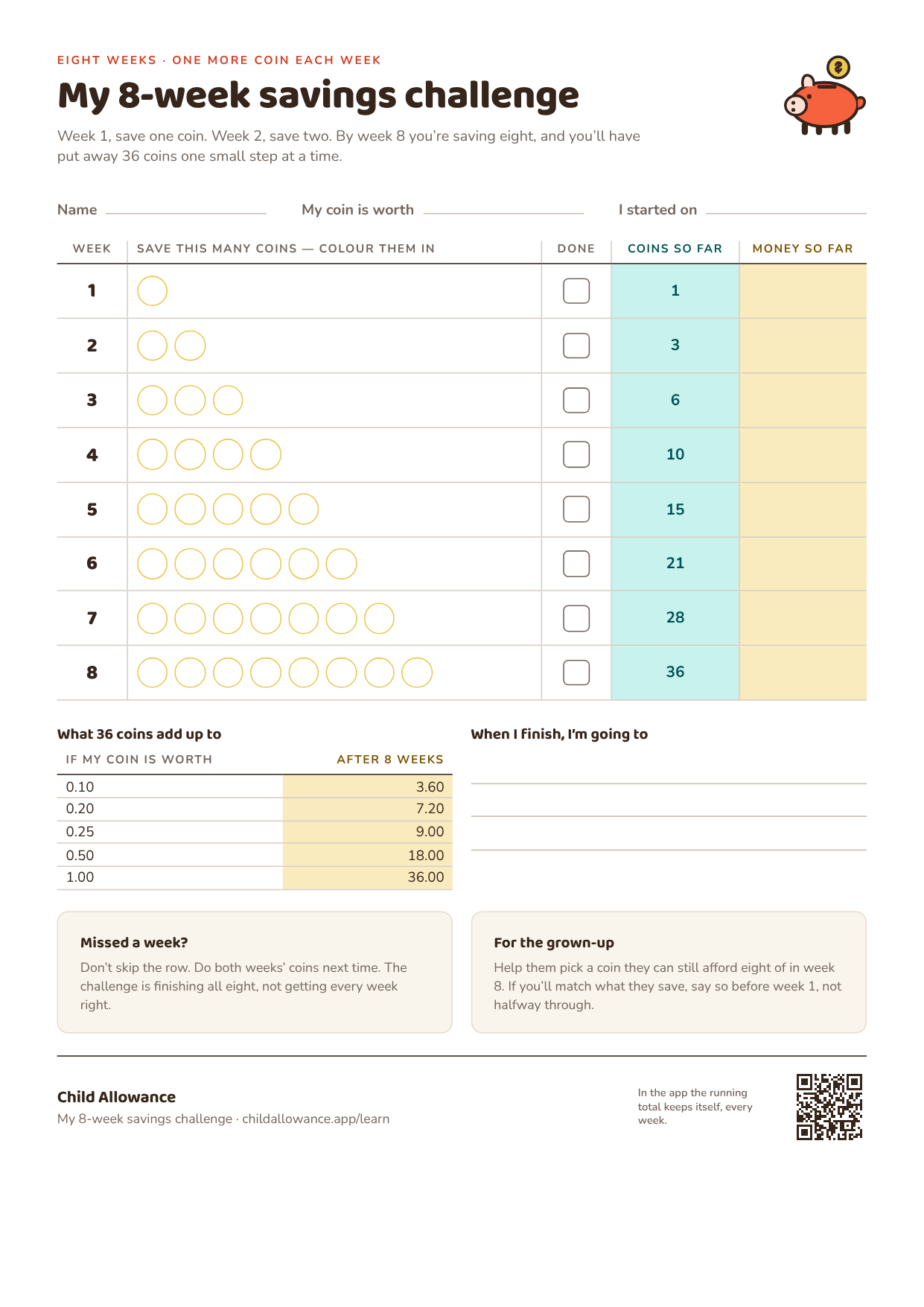
A line for their name, what their coin is worth and the day they started. Then eight rows, one per week: the week number, that many coin circles to colour in, a done box, a printed coins so far (1, 3, 6 … up to 36) and a blank money so far column. Underneath, a table of what 36 coins come to at common coin values, and lines for what they’ll do with it.
Week one is a single coin, which is the point. The habit forms while it costs almost nothing, and the amounts only grow once saving is already something they do.
Choosing the coin
This is the one real decision. Week eight is eight coins in one week, so pick a coin where eight of them fit inside a week’s allowance with room to spare. At £0.20 a coin, week eight is £1.60 and the total is £7.20. At £1, it’s £8 and £36.
Write the coin’s value on the sheet before week one. Changing it halfway turns the running totals into nonsense.
Running the eight weeks
Same day every week, ideally payday. The coins go into the save jar, or wherever savings live, then they colour that week’s circles and tick the box. The coins-so-far column is already printed, so the money-so-far column is one multiplication: coins so far times the coin’s value.
A missed week isn’t a failed challenge. They do both rows the following week, which the sheet tells them. Finishing all eight matters more than getting every week on time.
At the end of week eight
The “when I finish” lines get filled in at the start, but it’s fine if the answer changes by week eight. Spending the 36 coins on something else entirely is still a finished challenge. Many children ask to go again with a bigger coin, which is the best outcome the sheet has.
Printing it
Both paper sizes are on this page. Print at 100%. The coin circles are sized for colouring, and mono works fine. Keep it beside the jar so the sheet and the money are updated together.